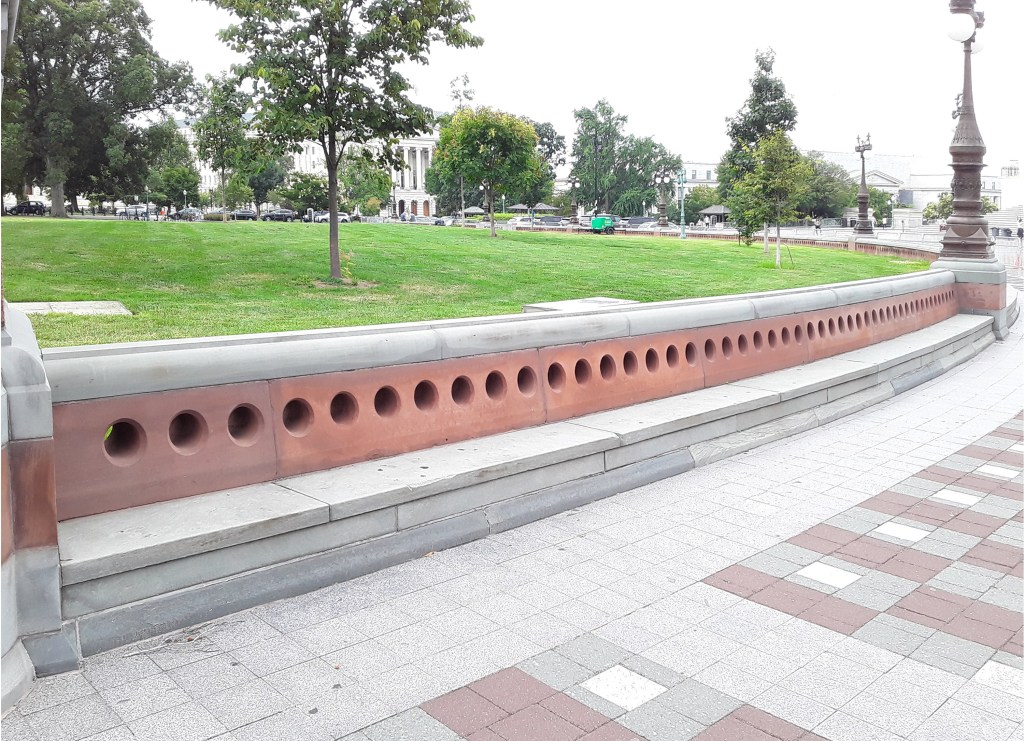
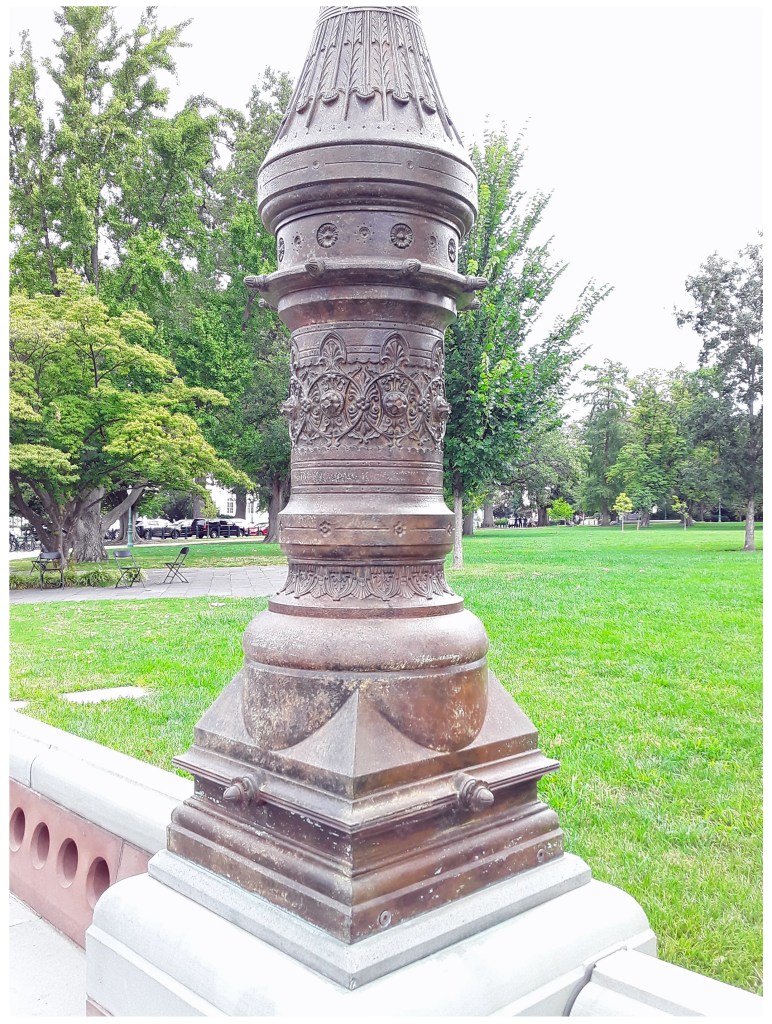
Along with the fountains and lamp-piers, Thomas Wisedell had also designed two ranges of seated walls separating the plaza from the planted grounds, each running about 250 feet long and set in a semicircular manner facing the Capitol building. These were constructed of bluestone and red sandstone, with both materials also forming the bases for the bronze lamps as well as the granite lamp-piers.
The red sandstone was a common building material used throughout the region (most famously for the Smithsonian Institution), quarried from Seneca, Maryland, about 30 miles northwest of Washington, D.C and was shipped via the Chesapeake & Ohio Canal which ran alongside the Potomac River. The bluestone came from the Bigelow Bluestone Company of Malden, NY at the base of the Catskill Mountains.
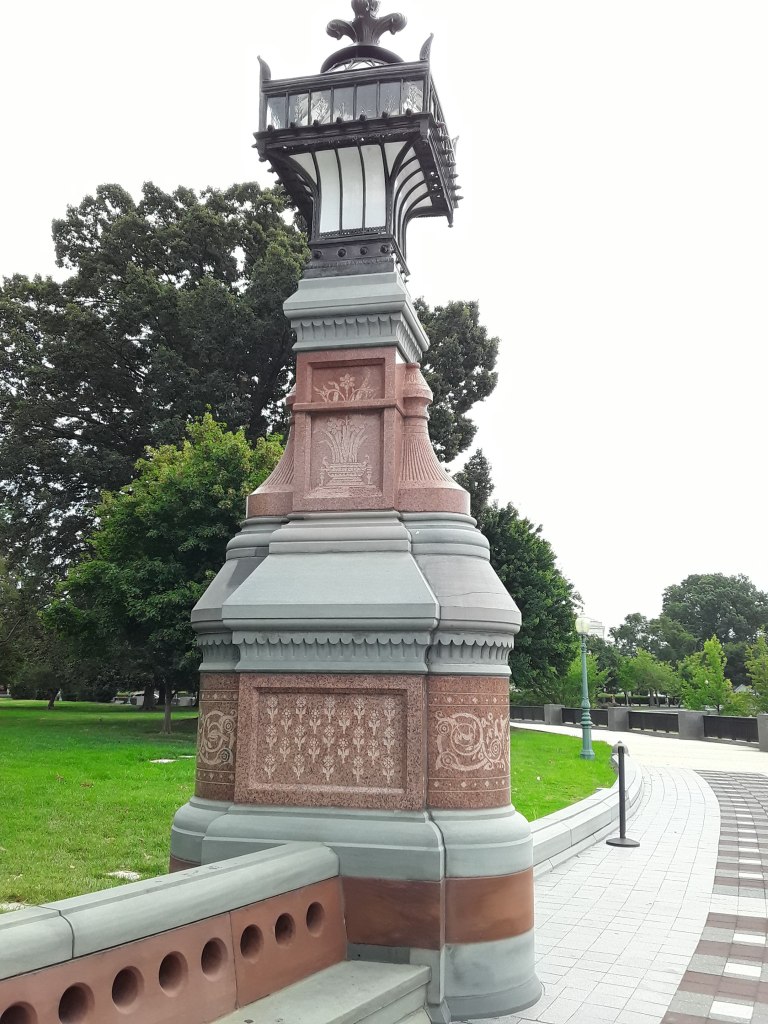
Like the rest of the east plaza the bronze lamp posts and stone seating were designed in July and August 1874. For the seating, the bluestone was used for the coping as well as the seats while softer, red Senaca sandstone was cut into large blocks pierced with holes cut 6 inches in diameter. Since the red sandstone was much softer than the bluestone, Wisedell rarely used it in a structural manner, though when he did, as in the bases of the lamp-piers, the stone had to be cut in much larger blocks in order to support to weight of the bluestone and granite which were cut into slabs rather than full blocks. Also, Wisedell set it between slabs or protected under a bluestone coping thus minimizing the effects that weathering and erosion.
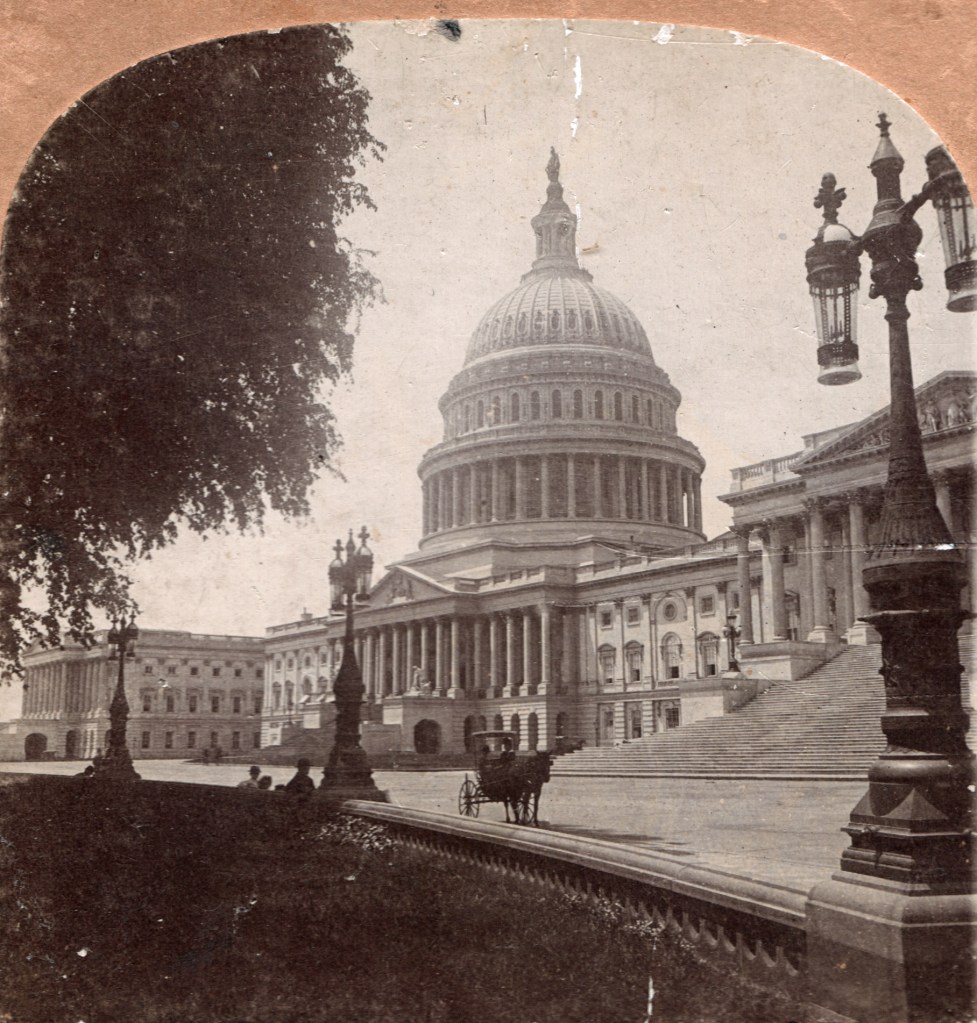
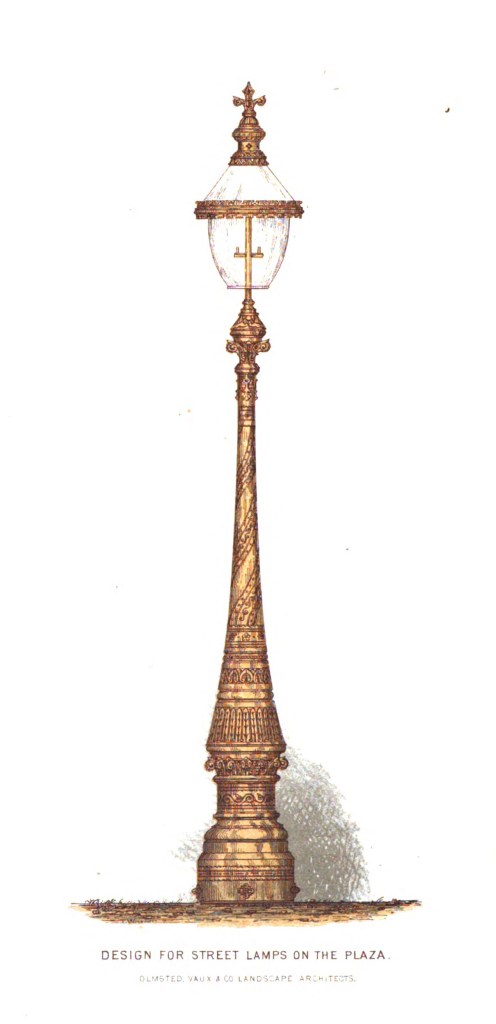
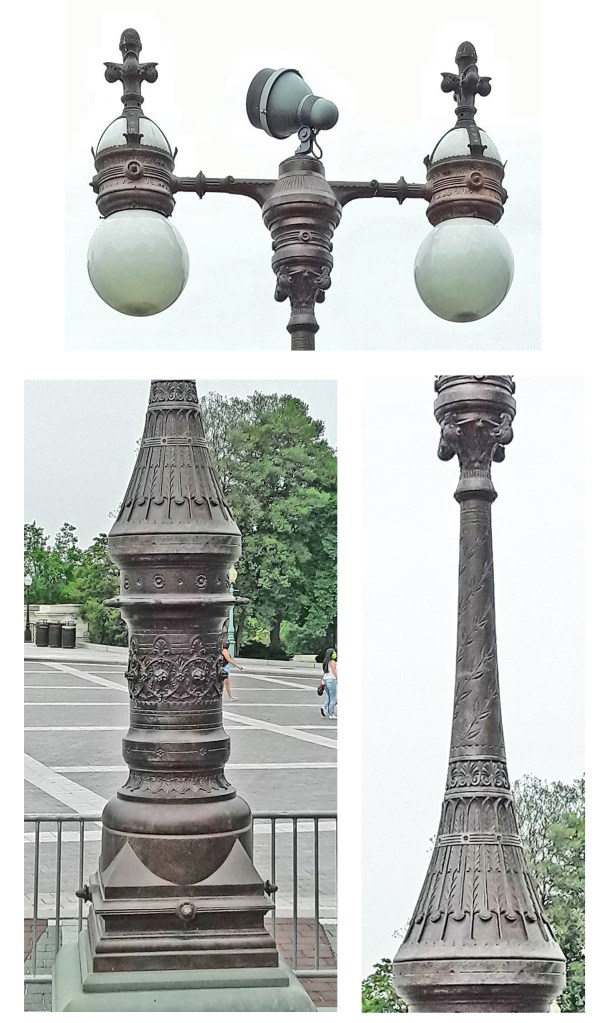
As for the sixteen bronze lamps, their designs incorporated Indo-Islamic and Native American motifs as well as contemporary ideas of Christopher Dresser. Thomas Wisedell had previously designed lamps for the oval plaza at the main entrance to Prospect Park as well the lamps at the base of the stairs in Washington Park in 1872 and 1873 respectively. Though those remained unbuilt, it does show that Wisedell’s experimentation in the Brooklyn parks would finally see their fruition at Washington. Like the iron work for other parks by Olmsted, the bronze lamps were cast by Janes & Kirtland of New York.
the fountain at the Plaza, Brooklyn, NY 1872.
Frederick Law Olmsted was given congressional approval on September 28, 1874 and on October 8th, Edward Clark signed the first contracts for the materials. The bluestone began arriving in late November but unfortunately Bigelow did not properly mark the material which delayed construction until mid-December. By the fall of 1875, most the architectural features in the east plaza had basically been completed, with the plantings waiting until the spring of 1876.
Further Reading:
- Documentary History of the Construction and Development of the United Stated Capitol Building and Grounds (Washington, D.C.: The Government Printing Office, 1904).
- The Papers of Frederick Law Olmsted. Volume VII: Parks, Politics and Patronage 1874-1882 (Baltimore, MD: Johns Hopkins University Press, 2007).
- Brown, Glenn, History of the United States Capitol vols. I and II (Washington, D.C.: U.S. Government Printing Office, 1900, 1903).
- Dresser, Christopher, Studies in Design (published in parts between 1874 and 1876).
- Jones, Owen, The Grammar of Ornament (London: Day & Son, 1856).
- Keim, DeBenneville Randolph, Keim’s Illustrated Handbook. Washington and Its Environs: A Descriptive and Historical Hand-Book to the Capitol of the United States of America. 6th ed. (Washington, D.C.: DeB. Randolph Keim, Publisher, 1875).
- Weeks, Christopher, AIA Guide to the Architecture of Washington, D.C., 3rd ed. (Baltimore and London: Johns Hopkins University Press, 1994).
 The Architecture of Thomas Wisedell