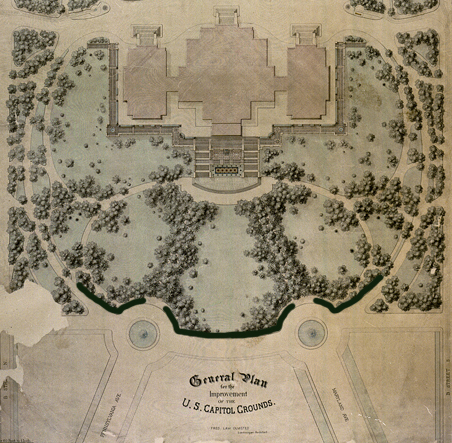
Black outline marks the location of western wall with entrances designed by Thomas Wisedell.
Work on grading the grounds on the western side of the Capitol building began in 1876. Since the architectural renderings for this project were undated, most of the information was found the congressional records and in the letters and correspondences of Frederick Law Olmsted.
Based on congressional appropriations, it appears as though Thomas Wisedell probably designed the stonework and lanterns for the walls and entrances along the Capitol grounds’ western perimeter in 1875-76. The stonework located at the Pennsylvania Avenue entrance was completed in 1878 but to to poor weather and budget restrictions, the entrance at Maryland Avenue not completed until 1881.
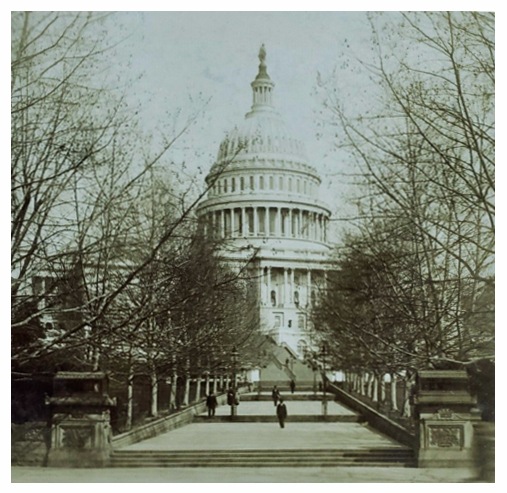
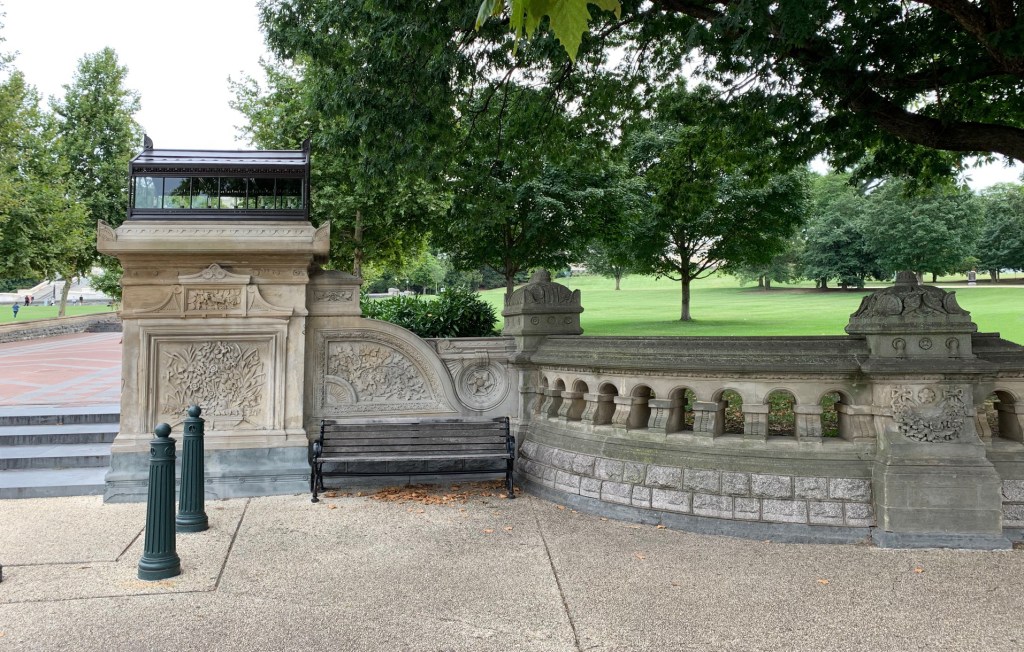
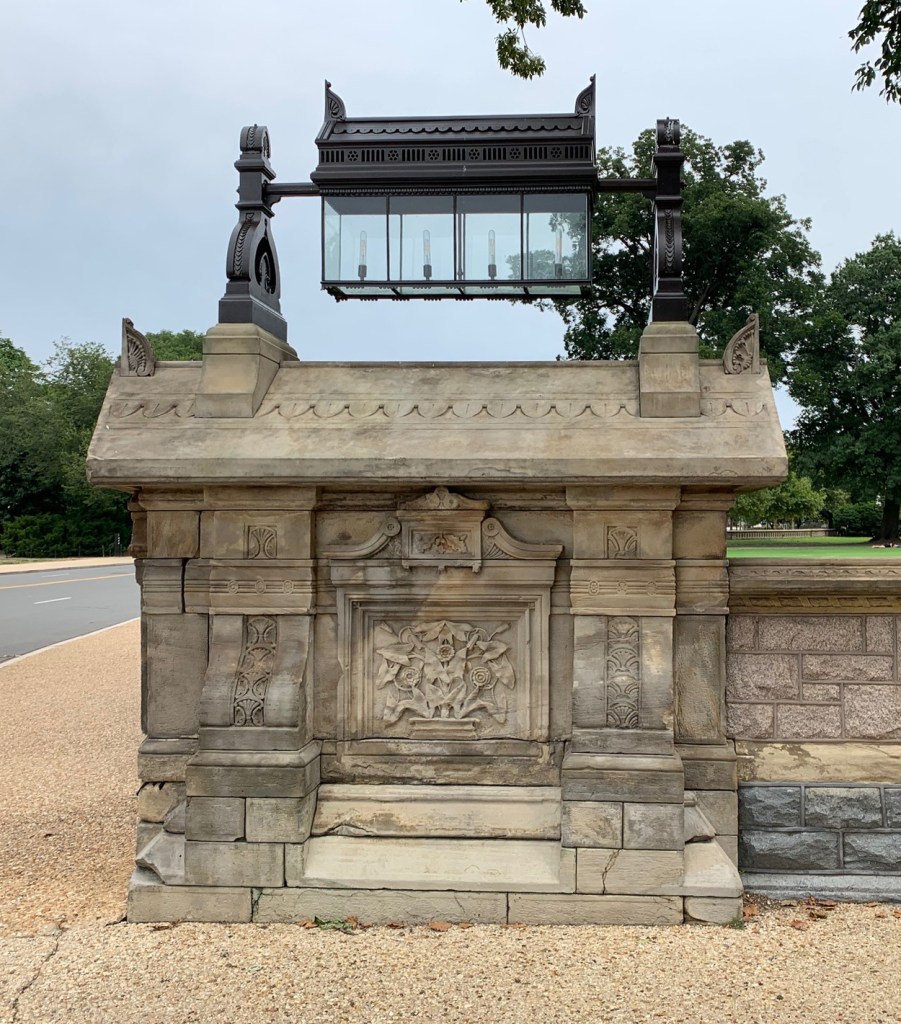
For the stonework at Washington, D.C., though Wisedell maintained his Indo-Islamic influences, he also incorporated more Roman and renaissance motifs though most of the botanical designs closely echo his earlier work at the Concert Grove in Brooklyn’s Prospect Park. All the stonework was completed by Richard Rothwell & Co.
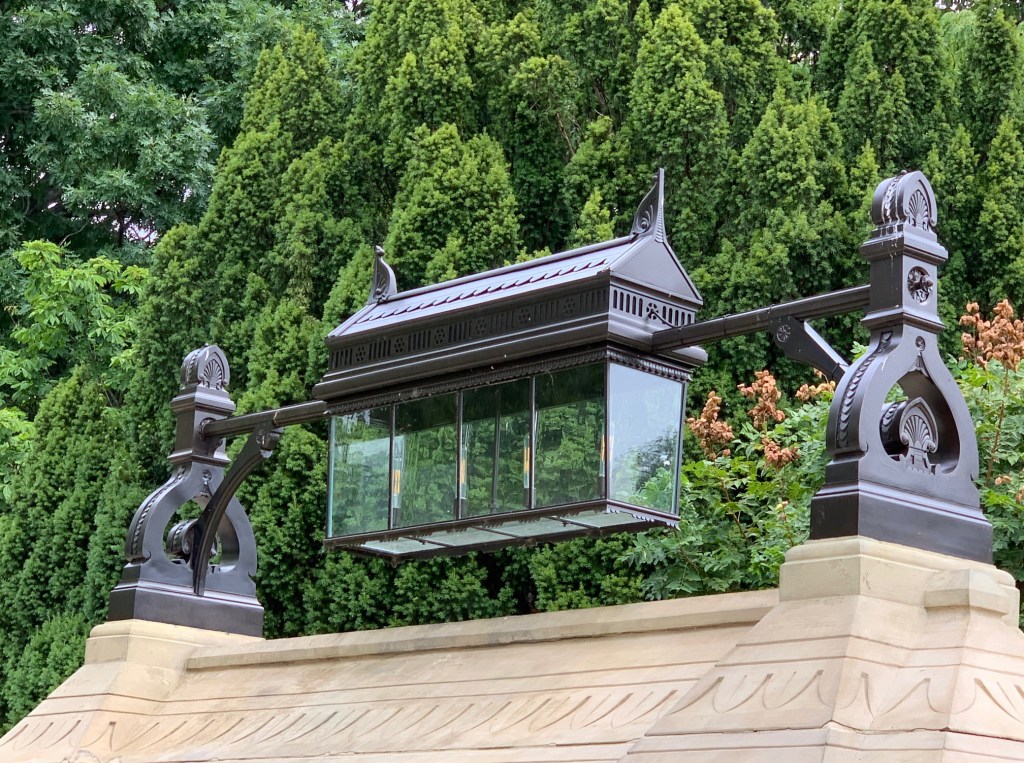
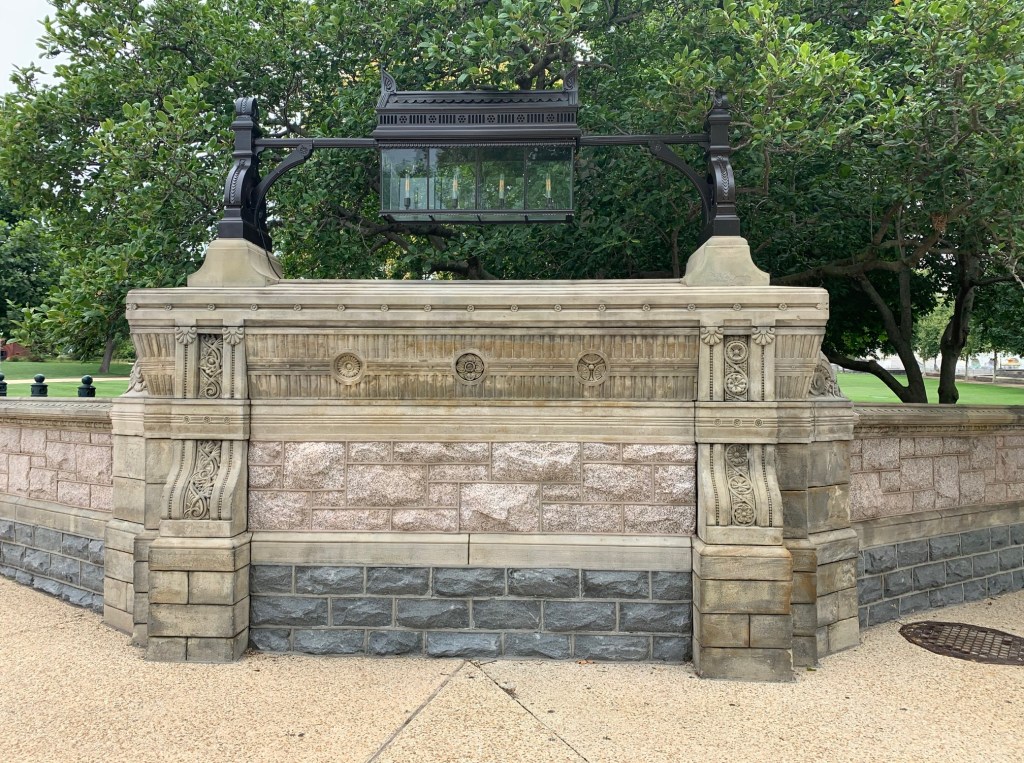
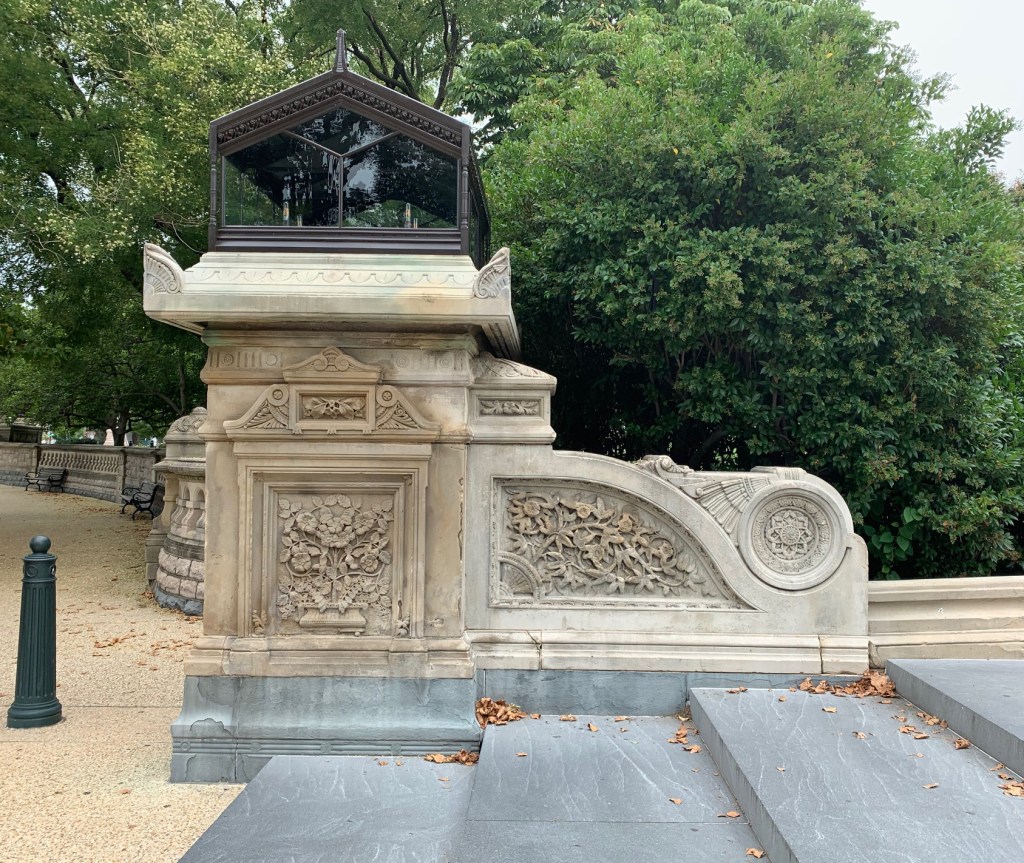
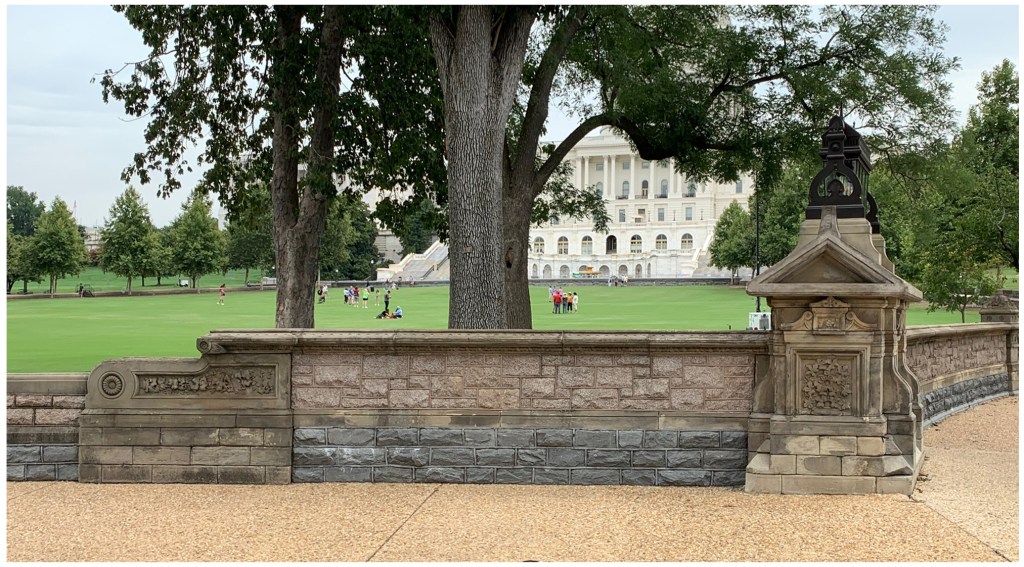
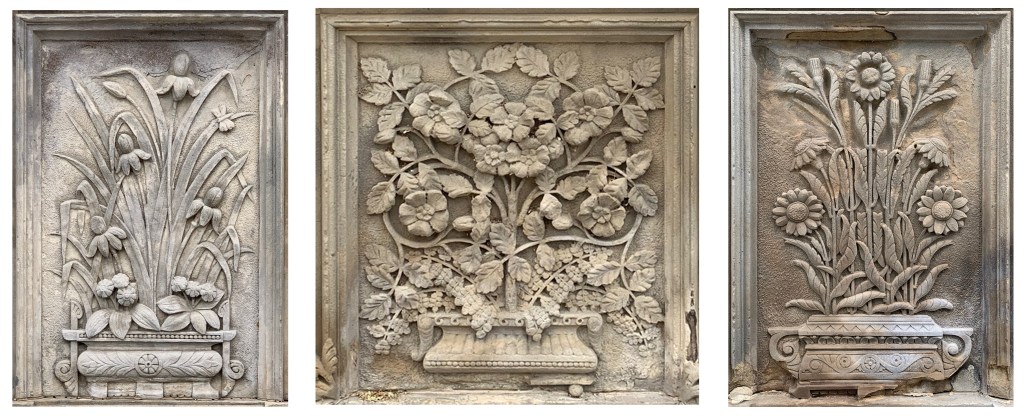
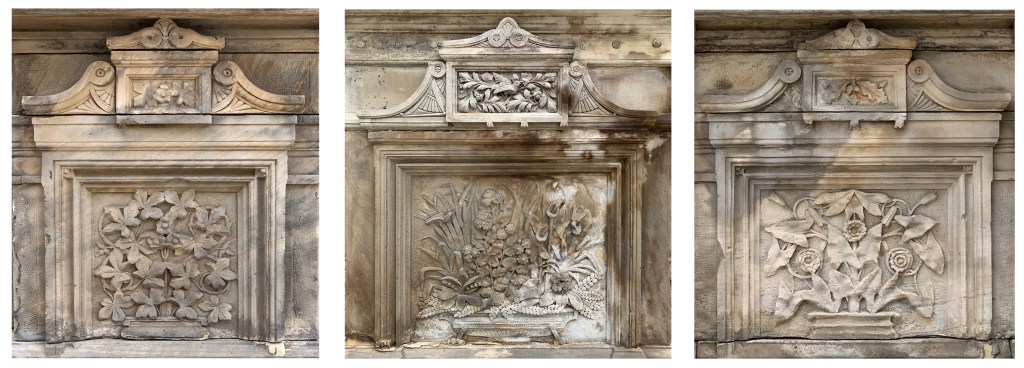
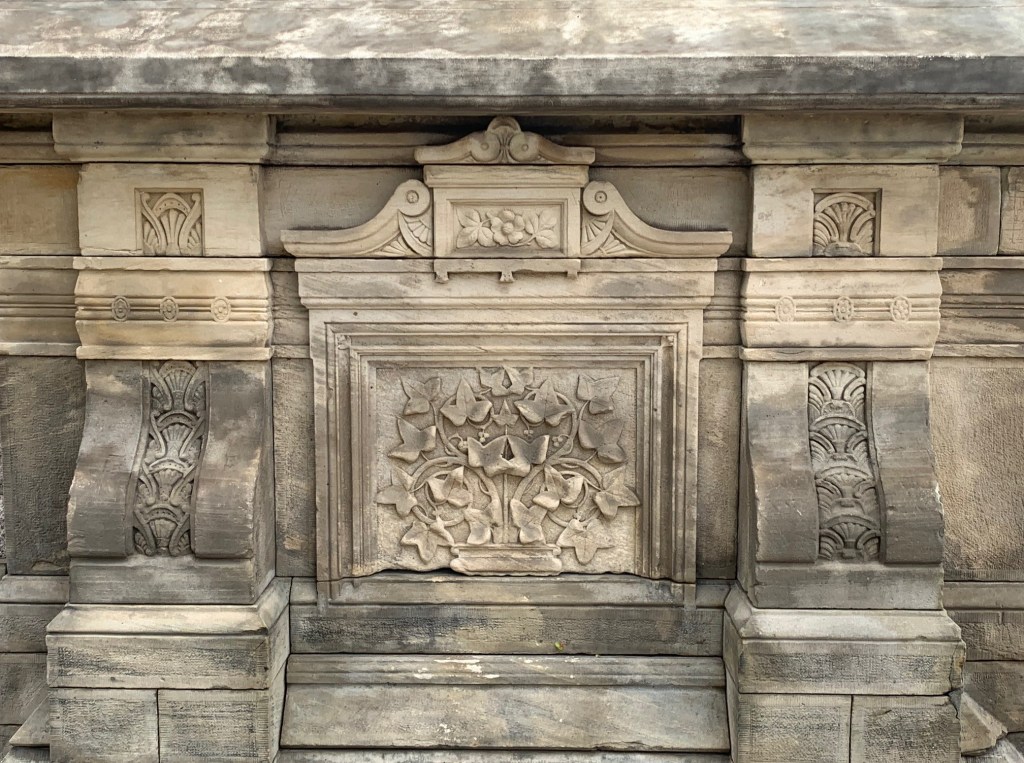
Along with the stonework for the entrances at Pennsylvania and Maryland avenues, Thomas Wisedell also designed fountain as the centerpiece of the wall along the western boundary of the Capitol grounds which will be the subject of the following post.
Further Reading:
- Allen, William C., History of the United States Capitol: a Chronicle of Design, Construction and Politics (Washington, D.C.: The Government Printing Office, 2001).
- Annual Reports of the Architect of the United States Capitol (Washington, D.C.: U.S. Government Printing Office, 1880-1883).
- Documentary History of the Construction and Development of the United Stated Capitol Building and Grounds (Washington, D.C.: The Government Printing Office, 1904).
- The Papers of Frederick Law Olmsted. Volume VII: Parks, Politics and Patronage 1874-1882 (Baltimore, MD: Johns Hopkins University Press, 2007).
- The Papers of Frederick Law Olmsted. Volume VIII: The Early Boston Years 1882-1890 (Baltimore, MD: Johns Hopkins University Press, 2013).
- Brown, Glenn, History of the United States Capitol vols. I and II (Washington, D.C.: U.S. Government Printing Office, 1900, 1903).
- Weeks, Christopher, AIA Guide to the Architecture of Washington, D.C., 3rd ed. (Baltimore and London: Johns Hopkins University Press, 1994).
 The Architecture of Thomas Wisedell
“Like the Concert Grove, Janes & Kirtland were hired to create all of the bronze work while Ellin & Kitson did all of the stone carving.” I don’t see mention of them in the Prospect Park posts.
LikeLike
Amy,
Thanks for noticing that omission. I did write a brief piece about Robert Ellin which I thought I had included. After looking over the posts, he is only briefly mentioned in Part 2(a) as part of the Central Park post and in Part 2(f) on former drinking fountains at the Concert Grove. Ellin is too much of a pivotal figure in American stone carving to be be left our and his work at the Concert Grove cannot be ignored so I might devote an entire post to his early career.
LikeLike
Amy,
The post had been updated.
LikeLike