Part 18 – Francis Kimball, Architect — The Loomer Opera House, Willimantic, Conn.

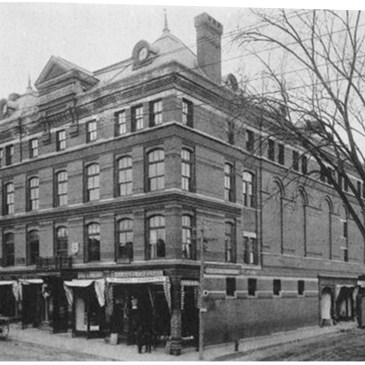
Shortly after Kimball was hired to design the Goodwin Building in Hartford in May of 1879, he was also asked to design a commercial block in Willimantic, Connecticut for Silas Loomer (1824-1899).  Loomer was originally from Columbia, Connecticut and in the 1840’s, he began teaching at Hop River.  He soon set up a small business … More Part 18 – Francis Kimball, Architect — The Loomer Opera House, Willimantic, Conn.

Part 17 – Francis Kimball, Architect — The Goodwin Building, Hartford, Conn.

By 1879, Kimball’s practice was really taking shape.  Seabury and Jarvis Halls as well as the Hartford Orphan Asylum had all been completed, and other smaller commissions were underway.  In mid-January, Kimball had moved his office out of Seabury Hall and into the second floor of the State Savings Bank building at 39 Pearl Street, … More Part 17 – Francis Kimball, Architect — The Goodwin Building, Hartford, Conn.

Part 16 – Francis Kimball, Architect — South School and The Connecticut Theological Institute.

As construction was moving forward on Seabury and Jarvis Halls at Trinity College, Francis Kimball would find himself entangled in two projects which highlighted problems faced by architects as the profession struggled to gain legitimacy– one would play out in the local press while the other was elevated into the national debate over the relationship … More Part 16 – Francis Kimball, Architect — South School and The Connecticut Theological Institute.

Part 15 – Francis Kimball, Architect — The Hartford Orphan Asylum.

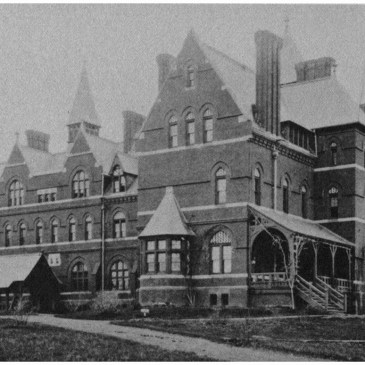
In February 1876, Francis Kimball was asked to submit plans to design new facilities for the Hartford Orphan Asylum.  For this commission, Kimball would  once again compete against his friend and rival George Keller.  The Hartford Orphan Asylum was established in 183l and formally incorporated two years later.  Its mission was to care for orphaned … More Part 15 – Francis Kimball, Architect — The Hartford Orphan Asylum.