Part 4(c) – The Summer-House, Washington, D.C.

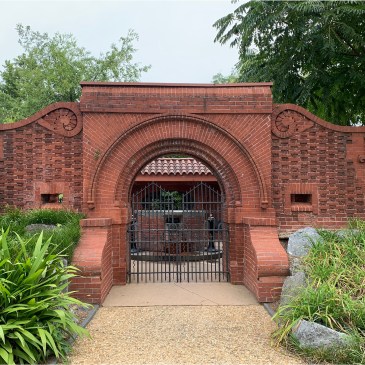
By the late 1870’s, grading and planting of the grounds on the western side of the United States Capitol building had progressed to a point that visitors were complaining that there was no seating or any place to retreat during the hot summer months. This prompted Frederick Law Olmsted to plan a summer-house to be … More Part 4(c) – The Summer-House, Washington, D.C.
Part 4(b) – The Capitol Terrace, Washington, D.C.

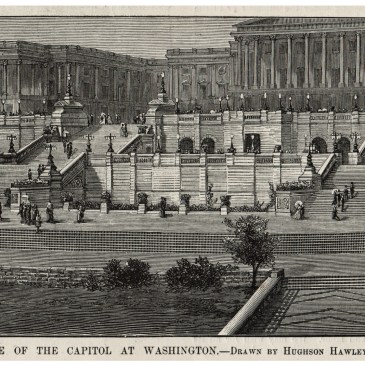
While Thomas Wisedell was designing the architectural features for the East Plaza in the summer of 1874, he was also working out multiple studies and perspectives for a suitable design of a terrace to wrap around the north, south and west sides of the U. S. Capitol building. The existing terrace was designed by Charles … More Part 4(b) – The Capitol Terrace, Washington, D.C.

Part 4(a) still continued – The East Plaza, Capitol Grounds, Washington, D.C.

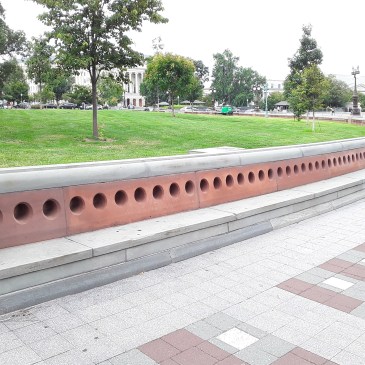
Along with the fountains and lamp-piers, Thomas Wisedell had also designed two ranges of seated walls separating the plaza from the planted grounds, each running about 250 feet long and set in a semicircular manner facing the Capitol building. These were constructed of bluestone and red sandstone, with both materials also forming the bases for … More Part 4(a) still continued – The East Plaza, Capitol Grounds, Washington, D.C.

Part 4(a) continued – The East Plaza, Capitol Grounds, Washington, D.C.

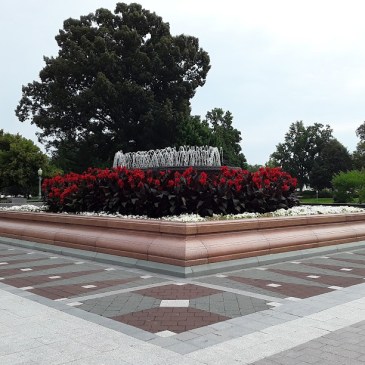
Near the granite lamp-piers are a pair of bronze fountains which sit in the center of red, Passamaquoddy granite planters, each measuring 30′ x 40′. The bronze fountains were designed as rectangular pedestal bowl with rounded ends, also known as a capsule shape. Though the bold shape is quite impressive, the stacked layers of ornament … More Part 4(a) continued – The East Plaza, Capitol Grounds, Washington, D.C.

Part 4(a) – The East Plaza, Capitol Grounds, Washington, D.C.

While Thomas Wisedell was busy preparing the map of Olmsted’s plan in the summer and fall of 1874, he was also designing the architectural features for the plaza on the east side of the Capitol building. During that period, existing buildings were removed and work had begun on regrading the property and laying gas and … More Part 4(a) – The East Plaza, Capitol Grounds, Washington, D.C.

Part 4 – The Capitol Grounds, Washington, D.C.

In March of 1873, Congress voted to extend the size of the grounds surrounding the U. S. Capitol building and  Edward Clark, the Architect of the Capitol, was asked to design a plan for the expanded grounds. Clark immediately declined, stating, “not having any practice or pretensions to skill as landscape gardener, I earnestly recommend … More Part 4 – The Capitol Grounds, Washington, D.C.

Part 3(a) still continued– The 1876 Centennial Exposition

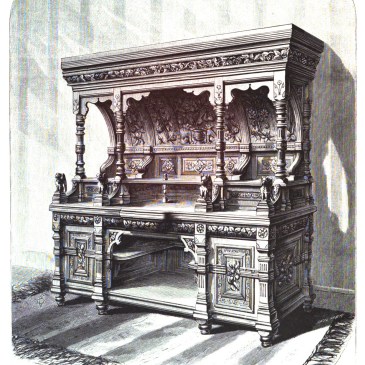
Besides the architectural competition for the Centennial Exposition, Thomas Wisedell had also designed a Jacobean/ Early Georgian style sideboard which was carved and constructed by the firm Ellin & Kitson and displayed with contemporary furniture at the fair. It was Robert Ellin’s firm who had also carved the stonework at the Concert Grove in Prospect … More Part 3(a) still continued– The 1876 Centennial Exposition

Part 3(a) continued– The 1876 Centennial Exposition

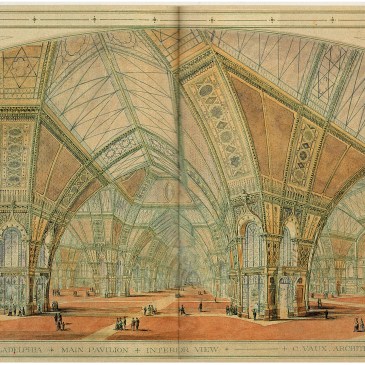
Though Thomas Wisedell and James Farnsworth were unsuccessful with their entry for the Centennial Exposition competition, Calvert Vaux and George Kent Radford were chosen as one of ten architectural firms invited into the second round. During the first round, Vaux & Radford had created an ingenious plan of twenty-one interconnected, square pavilions, each measuring about … More Part 3(a) continued– The 1876 Centennial Exposition

Part 2(f)- Drinking Fountains at the Concert Grove

A curious feature of the Concert Grove was the pair of granite drinking fountains placed at either end of the lakeside concourse. Their design dates from 1872 and was unlike the carved stonework throughout the Concert Grove though they clearly relate to the decorative buttresses on the Nethermead Arches which Calvert Vaux had designed with … More Part 2(f)- Drinking Fountains at the Concert Grove

Part 3(a) — The 1876 Centennial Exposition

With the centennial of the founding of the United States approaching in 1876, President Ulysses S. Grant signed a bill in March of 1871 to establish a commission charged with creating an exposition to commemorate the event. Philadelphia was chosen as host and on April 1, 1873 a formal committee was appointed and a competition … More Part 3(a) — The 1876 Centennial Exposition