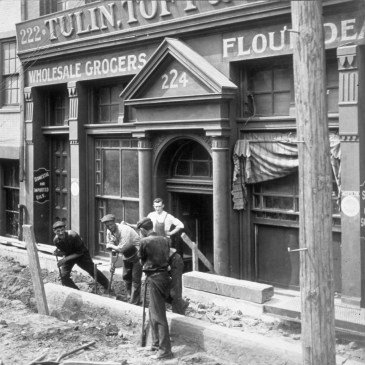
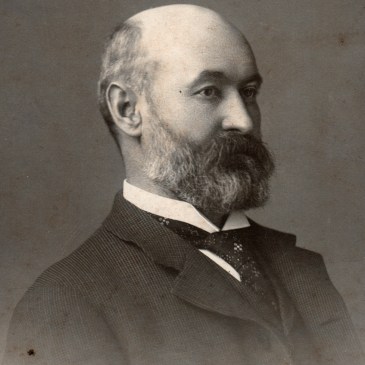
Part 17 – Francis Kimball, Architect — The Goodwin Building, Hartford, Conn.

By 1879, Kimball’s practice was really taking shape.  Seabury and Jarvis Halls as well as the Hartford Orphan Asylum had all been completed, and other smaller commissions were underway.  In mid-January, Kimball had moved his office out of Seabury Hall and into the second floor of the State Savings Bank building at 39 Pearl Street, … More Part 17 – Francis Kimball, Architect — The Goodwin Building, Hartford, Conn.

Part 16 – Francis Kimball, Architect — South School and The Connecticut Theological Institute.

As construction was moving forward on Seabury and Jarvis Halls at Trinity College, Francis Kimball would find himself entangled in two projects which highlighted problems faced by architects as the profession struggled to gain legitimacy– one would play out in the local press while the other was elevated into the national debate over the relationship … More Part 16 – Francis Kimball, Architect — South School and The Connecticut Theological Institute.

Part 14 – Francis Kimball, Architect — Elisha T. Smith Warehouse, Hartford, Conn.

When Francis Kimball was hired by Trinity College, he must have taken the job not as a full-time position, but rather as an extension of his private architectural practice.  After returning from London, not only was he responsible for the design and construction of Trinity College, but also had to complete the interior designs for … More Part 14 – Francis Kimball, Architect — Elisha T. Smith Warehouse, Hartford, Conn.

Part 12 — Francis Kimball (1845-1919)

In the summer of 1879, Thomas Wisedell formed a partnership with Francis Hatch Kimball, a successful architect working in Hartford, Connecticut who had recently received a contract to remodel the Madison Square Theatre in New York City.  It appears as though the partnership may have been instigated by Kimball who saw Wisedell’s connections in New … More Part 12 — Francis Kimball (1845-1919)