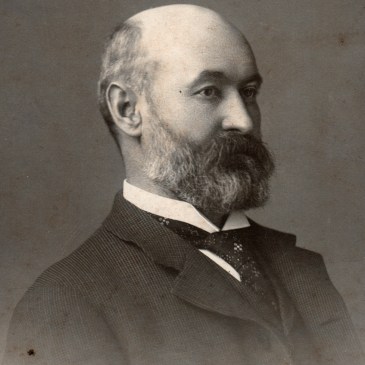
Part 12 — Francis Kimball (1845-1919)

In the summer of 1879, Thomas Wisedell formed a partnership with Francis Hatch Kimball, a successful architect working in Hartford, Connecticut who had recently received a contract to remodel the Madison Square Theatre in New York City.  It appears as though the partnership may have been instigated by Kimball who saw Wisedell’s connections in New … More Part 12 — Francis Kimball (1845-1919)
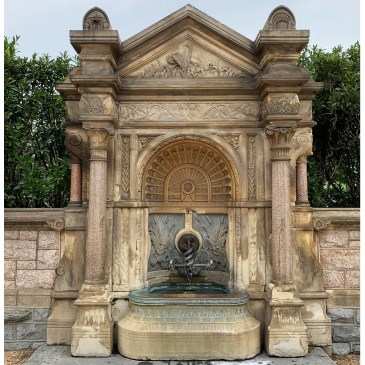
Part 4(f) rewrite – The Fountain, Capitol Grounds, Washington, D.C.

Since writing about the fountain back in May, new information has come to light which changes the timeline of how the western part of the Capitol grounds had developed.  It was previously thought that the fountain was one of the last architectural features to erected, it is now known that that was actually the first.  … More Part 4(f) rewrite – The Fountain, Capitol Grounds, Washington, D.C.

Part 4(a) still continued – Iron Trellis, The East Plaza, Capitol Grounds, Washington, D.C.

When Frederick Law Olmsted created his initial plan for the East Plaza in 1874, he had intended for a seated, iron trellis to be placed along one of the principle walks on the north side of the grounds, near the Delaware Avenue entrance. Like the waiting stations, a second trellis was erected in the same … More Part 4(a) still continued – Iron Trellis, The East Plaza, Capitol Grounds, Washington, D.C.

Part 4(a) still continued – Unbuilt Flagpoles, The East Plaza, Capitol Grounds, Washington, D.C.

While Thomas Wisedell was designing the lampposts for the East Plaza during the fall of 1874 and spring of 1875, he was also tasked with creating two bronze flagpoles.  These were shown on the plan of the Capitol grounds rendered by Wisedell in September 1874 and were to be located on the triangular plots near the … More Part 4(a) still continued – Unbuilt Flagpoles, The East Plaza, Capitol Grounds, Washington, D.C.

Part 4 – The Capitol Grounds, Washington, D.C.

In March of 1873, Congress voted to extend the size of the grounds surrounding the U. S. Capitol building and  Edward Clark, the Architect of the Capitol, was asked to design a plan for the expanded grounds. Clark immediately declined, stating, “not having any practice or pretensions to skill as landscape gardener, I earnestly recommend … More Part 4 – The Capitol Grounds, Washington, D.C.