Part 4 – The Capitol Grounds, Washington, D.C.

In March of 1873, Congress voted to extend the size of the grounds surrounding the U. S. Capitol building and  Edward Clark, the Architect of the Capitol, was asked to design a plan for the expanded grounds. Clark immediately declined, stating, “not having any practice or pretensions to skill as landscape gardener, I earnestly recommend … More Part 4 – The Capitol Grounds, Washington, D.C.
Part 3(a) still continued– The 1876 Centennial Exposition

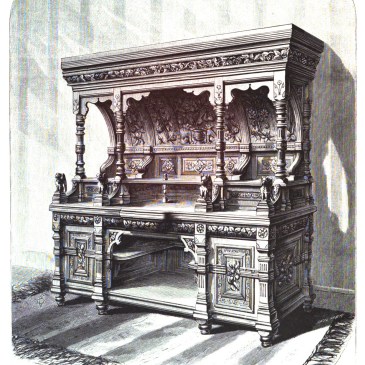
Besides the architectural competition for the Centennial Exposition, Thomas Wisedell had also designed a Jacobean/ Early Georgian style sideboard which was carved and constructed by the firm Ellin & Kitson and displayed with contemporary furniture at the fair. It was Robert Ellin’s firm who had also carved the stonework at the Concert Grove in Prospect … More Part 3(a) still continued– The 1876 Centennial Exposition

Part 3(a) continued– The 1876 Centennial Exposition

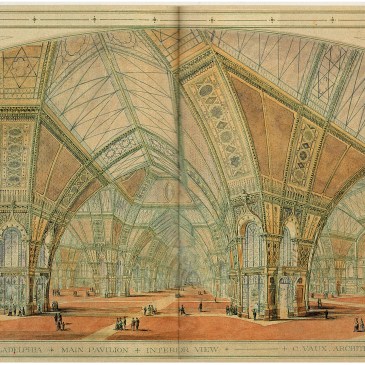
Though Thomas Wisedell and James Farnsworth were unsuccessful with their entry for the Centennial Exposition competition, Calvert Vaux and George Kent Radford were chosen as one of ten architectural firms invited into the second round. During the first round, Vaux & Radford had created an ingenious plan of twenty-one interconnected, square pavilions, each measuring about … More Part 3(a) continued– The 1876 Centennial Exposition

Part 2(f)- Drinking Fountains at the Concert Grove

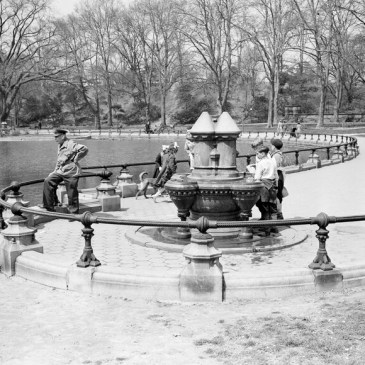
A curious feature of the Concert Grove was the pair of granite drinking fountains placed at either end of the lakeside concourse. Their design dates from 1872 and was unlike the carved stonework throughout the Concert Grove though they clearly relate to the decorative buttresses on the Nethermead Arches which Calvert Vaux had designed with … More Part 2(f)- Drinking Fountains at the Concert Grove

Part 3(a) — The 1876 Centennial Exposition

With the centennial of the founding of the United States approaching in 1876, President Ulysses S. Grant signed a bill in March of 1871 to establish a commission charged with creating an exposition to commemorate the event. Philadelphia was chosen as host and on April 1, 1873 a formal committee was appointed and a competition … More Part 3(a) — The 1876 Centennial Exposition

Part 2(e) continued — The Boathouse, Delaware Park, Buffalo, N.Y.

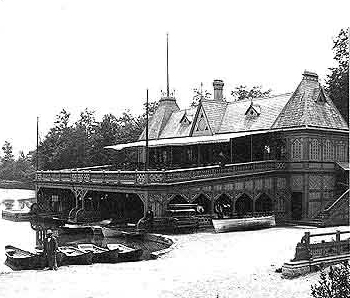
Within days of Edward Hager being awarded the contract to construct the sheltered seating at the boat landing as well as the original contract to erect the Spire-house, John R. Munroe (1828-1916) was awarded the contract to erect the Boathouse and refectory in Delaware Park. It was perhaps at that time when the park commissioners … More Part 2(e) continued — The Boathouse, Delaware Park, Buffalo, N.Y.

Part 2(e) continued — Spire House, Delaware Park, Buffalo, N.Y.

Delaware Park was the largest of three parks Olmsted & Vaux had designed for Buffalo.  Construction began in 1869-1870 and in June of 1874, Frederick Law Olmsted was back in Buffalo giving recommendations for the next phase of the park’s construction.  At the July 5th commissioners meeting, it was decided to procure plans and elevations … More Part 2(e) continued — Spire House, Delaware Park, Buffalo, N.Y.

Part 2(a) – From London to New York: Calvert Vaux, Jacob Wrey Mould and Central Park

In the fall of 1868, Thomas Wisedell was presented with an opportunity to move from London to New York City to be part of a group of British designers, engineers and craftsmen who had previously immigrated to the United States and were not only creating the modern park movement but also transforming American design. The … More Part 2(a) – From London to New York: Calvert Vaux, Jacob Wrey Mould and Central Park

Part 1(b) – Projects by Robert Jewell Withers 1863-1868

Churches and Chapels 1863-1865 – Restoration and addition to St. Llwchaiarn’s Church, Llanllwchaiarn, Newtown, Montgomeryshire, Wales (Extant) 1863           — At the behest of the Earl of Pembroke, five different architects were asked to send drawings completed churches to the Archdiocese of Dublin, Ireland, in consideration for the building of St. Bartholomew’s Church.  The final decision … More Part 1(b) – Projects by Robert Jewell Withers 1863-1868

Part 1(a) – Apprenticeship with Robert Jewell Withers 1863-1868

One of the challenges that countless historians have faced is that of attribution. Since it was uncommon for draftsmen to sign the renderings or to be given credit, we very rarely know who actually created specific drawings or actually designed specific details. This is definitely the case when researching Robert Withers. Since we may never … More Part 1(a) – Apprenticeship with Robert Jewell Withers 1863-1868