Part 13c (still continued)– Francis Kimball and Trinity College. Northam Towers.

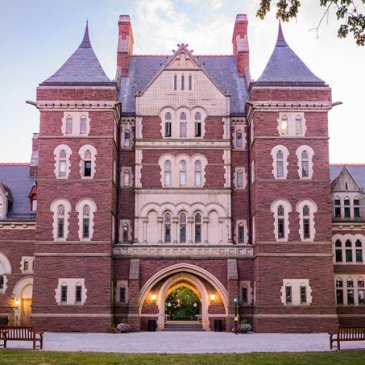
Jarvis and Seabury Halls opened in September 1878, though the chapel and museum were not completed until January.  What was still missing, however, was the gateway connecting the two buildings.  William Burges died on April 20, 1881; coincidentally, that was the same day that one of Trinity’s oldest trustees, Col. Charles H. Northam (1797-1881) announced … More Part 13c (still continued)– Francis Kimball and Trinity College. Northam Towers.
Part 13b (still continued)– Francis Kimball and Trinity College.  Seabury Hall.

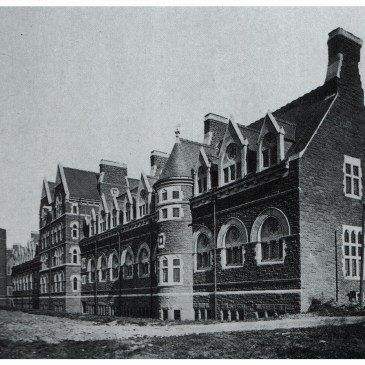
The initial designs for Seabury Hall were mostly created in 1875 and echoed the massing of Jarvis Hall with its central four-story block flanked by lower ranges. Unlike Jarvis, however, the lower sections were two stories rather than three, though with the same height on the exterior. Since Seabury was temporarily dedicated to functions such … More Part 13b (still continued)– Francis Kimball and Trinity College.  Seabury Hall.

Part 13 (continued – rewrite)– Francis Kimball and Trinity College.

In February 1872, the Trustees of Trinity College voted to sell their property to the City of Hartford as the site which the State of Connecticut would erect their new state capitol building. Following the sale Abner Jackson, the president of Trinity College, had contacted Frederick Law Olmsted as a consultant in finding a suitable … More Part 13 (continued – rewrite)– Francis Kimball and Trinity College.

Part 12 — Francis Kimball (1845-1919)

In the summer of 1879, Thomas Wisedell formed a partnership with Francis Hatch Kimball, a successful architect working in Hartford, Connecticut who had recently received a contract to remodel the Madison Square Theatre in New York City.  It appears as though the partnership may have been instigated by Kimball who saw Wisedell’s connections in New … More Part 12 — Francis Kimball (1845-1919)