When Olmsted & Vaux were first planning Central Park in the late 1850’s, it had been intended that much of its southern end of would be designed as a playground. Rather than a playground for small children, this was an area principally for cricket matches. At that time, the only intended architectural features were to be a stand for spectators as well as a building to accommodate players located at the north end of the grounds and along the 65th Street traverse road.
By 1860, local pressure had demanded that a section of the park be designed to meet the needs of mothers, nannies and small children. Also, there had been a recent scandal involving the quality and price of milk, prompting Olmsted to consider placing dairy stands throughout Central Park. His initial thoughts were to have simple buildings with a service counter opening onto a larger, covered verandah. Though the idea would probably have led a series of quaint, rustic buildings scattered throughout the park, these were never realized. Instead, the two men responded by redesigning the area just east of the playground to include a Summerhouse with rustic arbor (then known as the Kinderberg, and later replaced by the Chess & Checkers House), a Children’s Cottage, and a Carousel. The Playmates Arch was soon added connecting the playground to the children’s district.
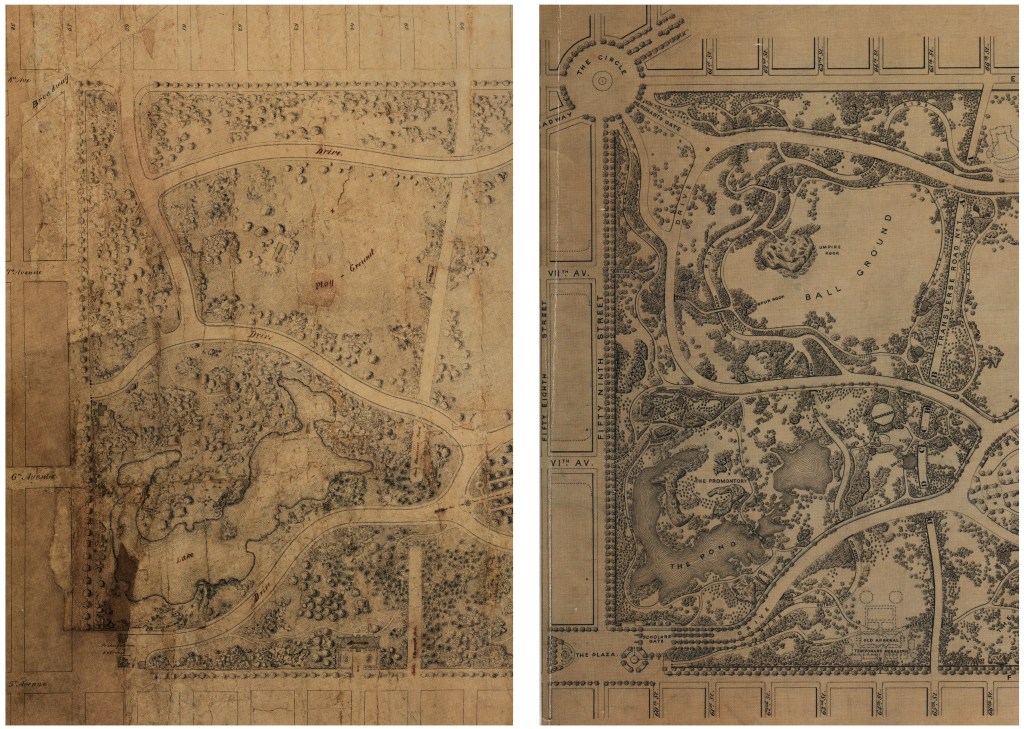
Right: South part of Central Park showing area redesigned as the children’s district, ca. 1875.
Though local pressure may have instigated the idea, Olmsted had personal reasons to include an area for children since his wife, Mary, was pregnant with their first child, John Theodore, who was born in July, but had unfortunately died a month later, presumably from infant cholera. This was quite devastating and the issue of clean air and fresh, healthy foods would stay with Olmsted for the remainder of his career.
As the park’s construction progressed through the mid-1860’s, Olmsted continued to voice concerns over the need for poorer, working class children to have access to fresh air and healthy foods. By 1866, with Mary pregnant once again, Olmsted reiterated the need for a Dairy to be constructed in the park. Later that year, Olmsted & Vaux identified an area just east of the carousel and rustic pavilion. The front of the building would have an open loggia for tables and chairs facing a lawn where sheep and cattle could graze while the rear of the building would have access to the sunken road which traversed the park at 65th Street, allowing for easy access for deliveries. Though the Dairy was now going to be a reality, once again tragedy would strike the Olmsted’s when on November 24, their son did not survive childbirth.
As for Calvert Vaux, he and his wife Catherine had four children by 1866 ranging in age from 3 years old to 11, so the Dairy was quite a personal project to him as well. (Vaux, with George K, Radford, would show his continued commitment with their later designs of numerous buildings for the Children’s Aid Society.)
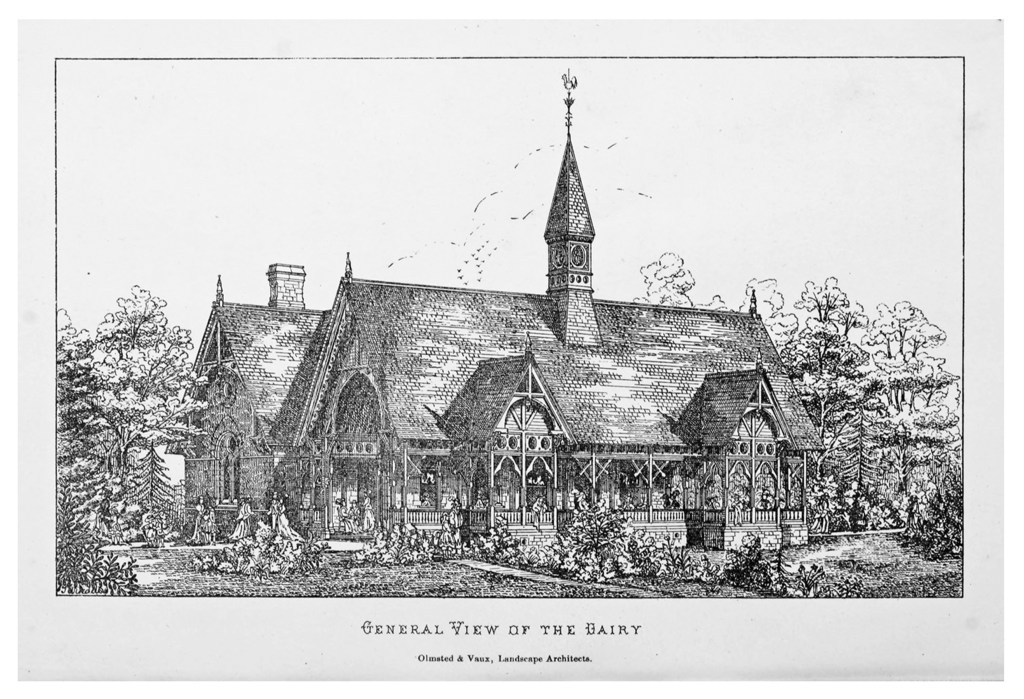
Though the location had been established, Vaux did not begin designing the building until the spring of 1869. Construction would not begin until August, and coincidentally, it was the following month when Thomas Wisedell’s name first appeared in Central Park’s records when he was paid $84.00 for architectural services. This was the only mention of his name for that year, and the extent of his “services” was probably in drafting working drawings, but most importantly, it would be his rendering of the dairy’s final design that appeared in the park’s 13th Annual Report. Between January and April of 1870, Wisedell received multiple payments for architectural services. This period coincides with the construction of the Dairy implying that he was probably creating the working drawings for the building’s details.
The Dairy is thought to be one of the first buildings designed by Vaux following his trip to Europe in the fall of 1868. Unlike most structures in the park, Jacob Wrey Mould does not seem to have been directly involved with its design, rather, Vaux relied on the assistance of engineer George K. Radford (who had been working in both Central Park and Prospect Park with Vaux) and Thomas Wisedell. Unfortunately, none of the plans for the Dairy have been located and is perhaps the only building not in the Central Park archives.
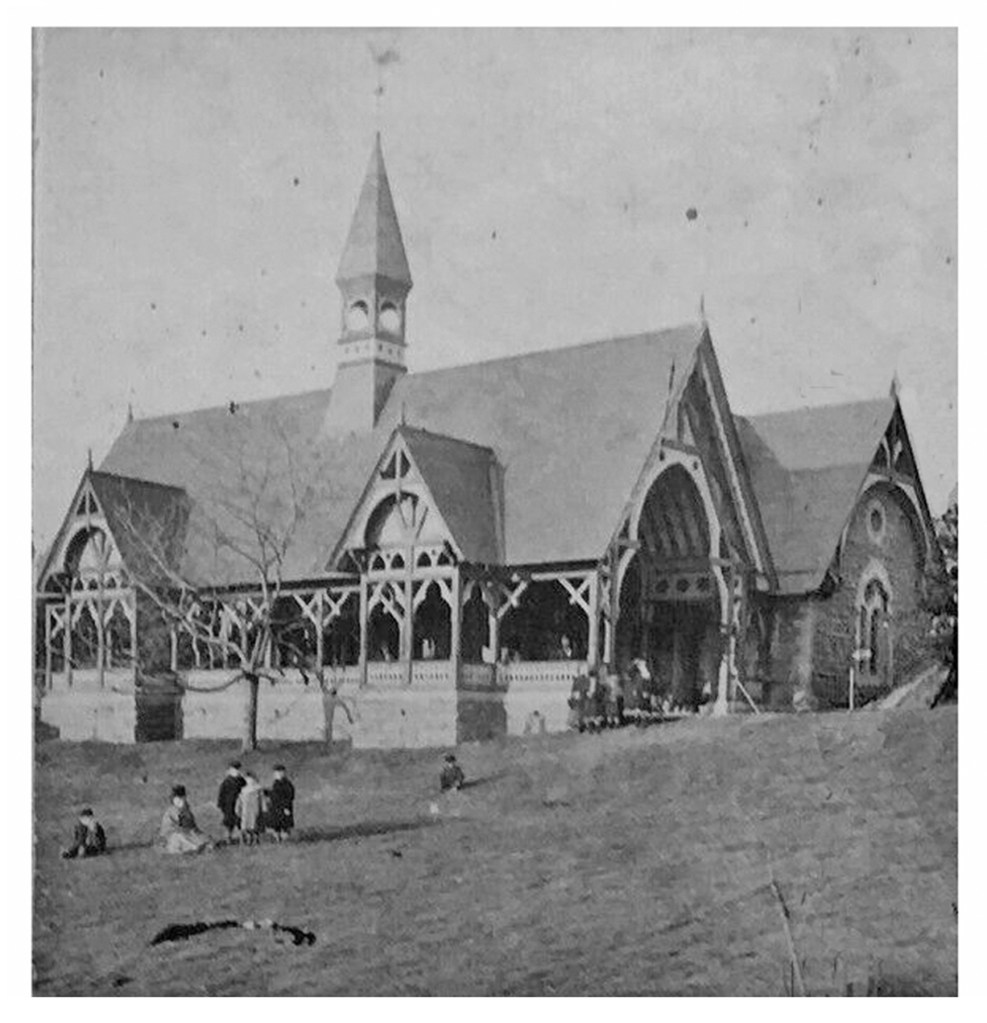
Rather than being inspired by the exposition buildings or rustic park structures he had seen in Europe, Vaux seems to have relied on farm buildings for the Dairy’s overall design. The open-air loggia clearly relates to traditional design of stables and horse barns, especially with the broad central passage and tall roof ventilator or cupola which was capped with a rooster weather vane. Since an open-air building does not need a ventilator, Vaux’ original scheme was actually a clock tower, which unfortunately, never had its clock installed.
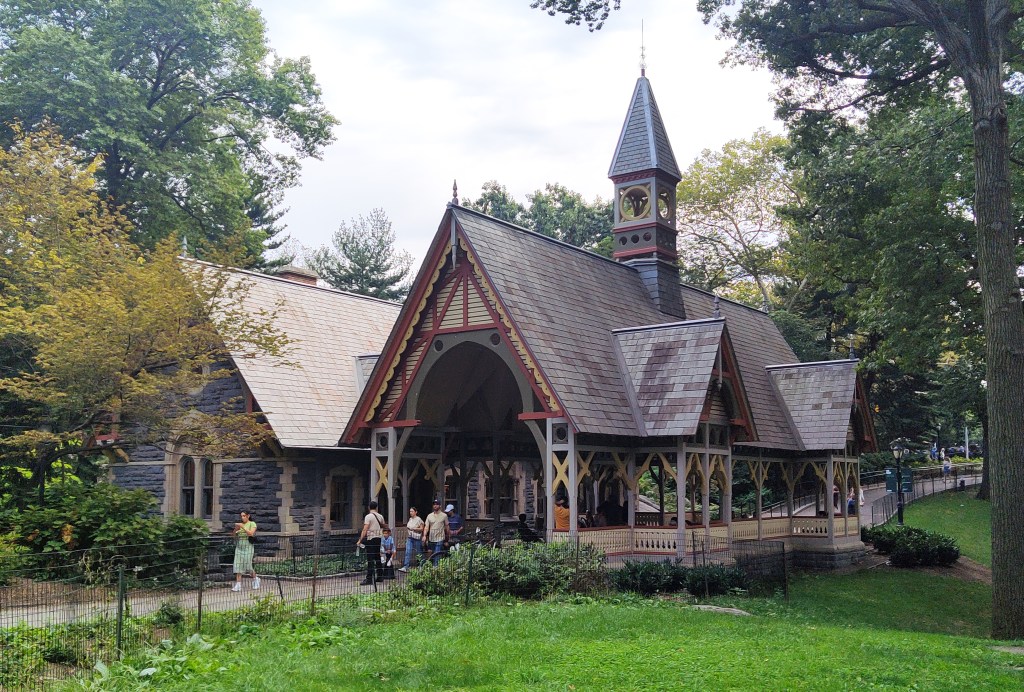
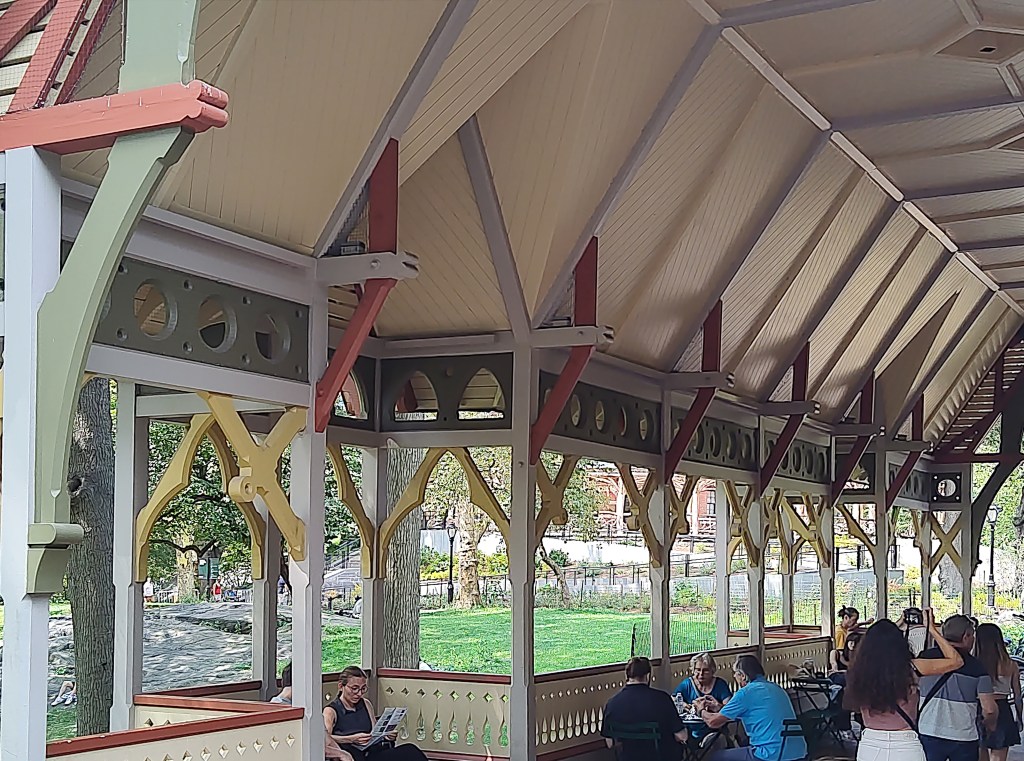
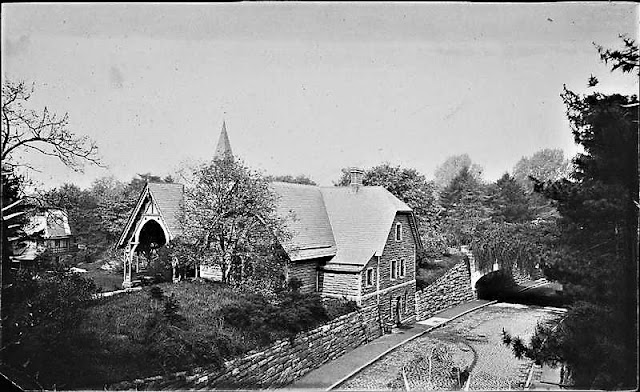
The stone building, constructed of local schist with limestone trim, blended aspects of poultry and dairy barns. The rear of the building was accessible by the 65th Street traverse road where deliveries were brought into the building. The lower level was designed with storage rooms, an ice-room and offices while the upper stories had offices and storage.
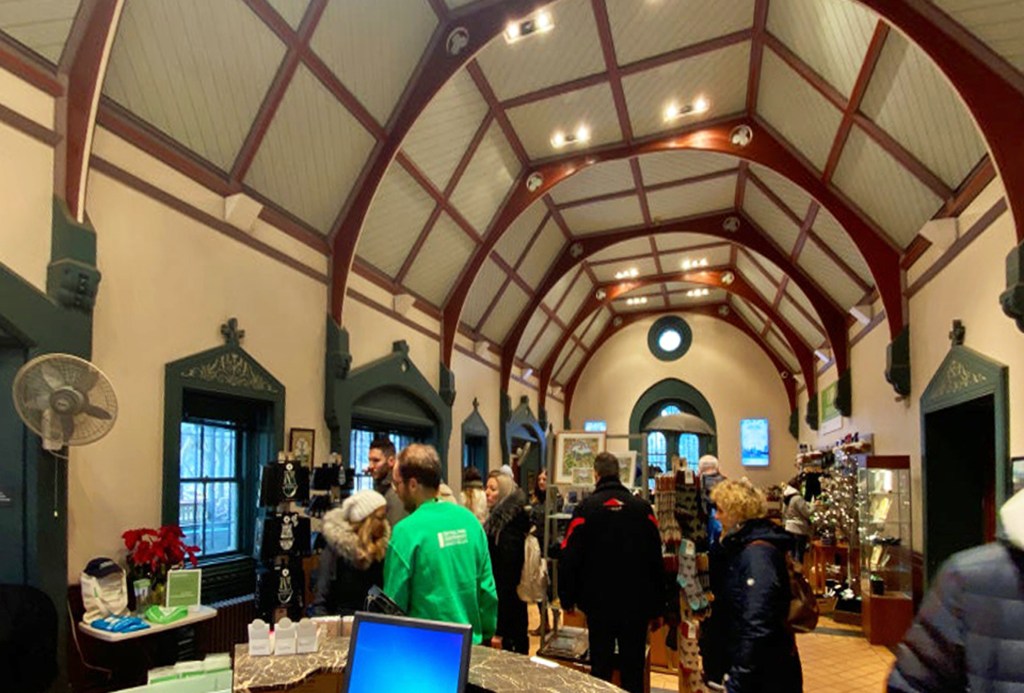
The main part of the building was a single, open room. The interior was decorated with simple, arched ribbed trusses and the doors and windows had gothic trim with floral motifs as well as trefoils and septfoils. At each end of the room, were rounded widows set under an oculus, set in a Florentine arch with a single oculus above. According to the annual report published in 1872, the interior had a large sales counter for food and drinks (principally milk, of course) and for the rental and sales of children’s “playthings.” Apparently, this interior did not last very long as the building was soon turned into a restaurant.
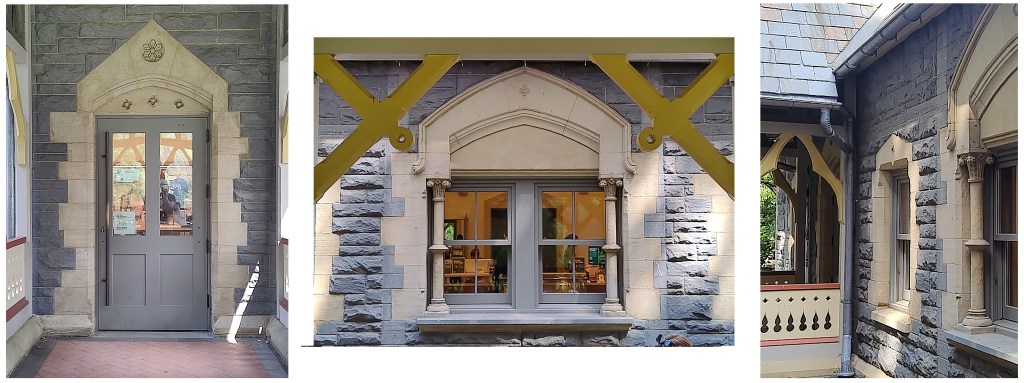
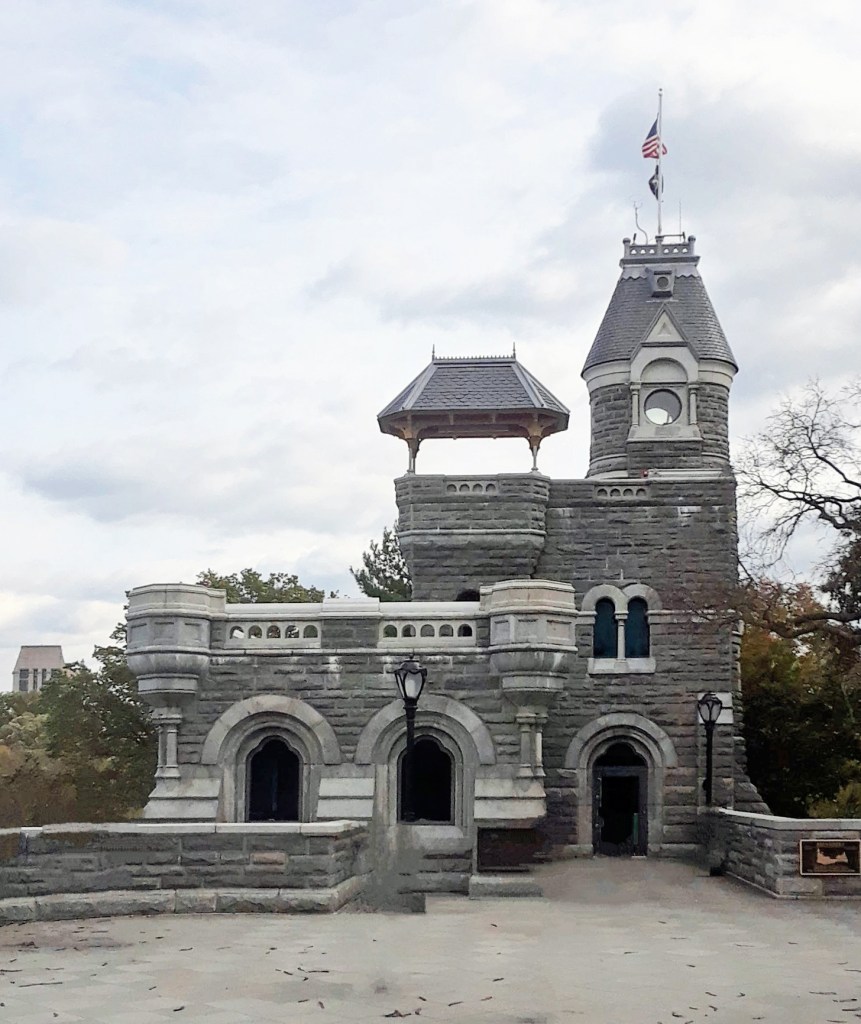
Though the ends of the building used rounded and Florentine arches, the windows and doors on the front (south side) of the building had Gothic details, perhaps reflecting Thomas Wisedell’s influence on the building’s details. When compared to the rest of the building many of the gothic details read as thin and under-scaled, giving the impression that it was not Calvert Vaux who designed the decorative details. As a comparison, the details on the Belvedere which was designed by Vaux with Jacob Wrey Mould in 1867 had much bolder, Romanesque stonework.
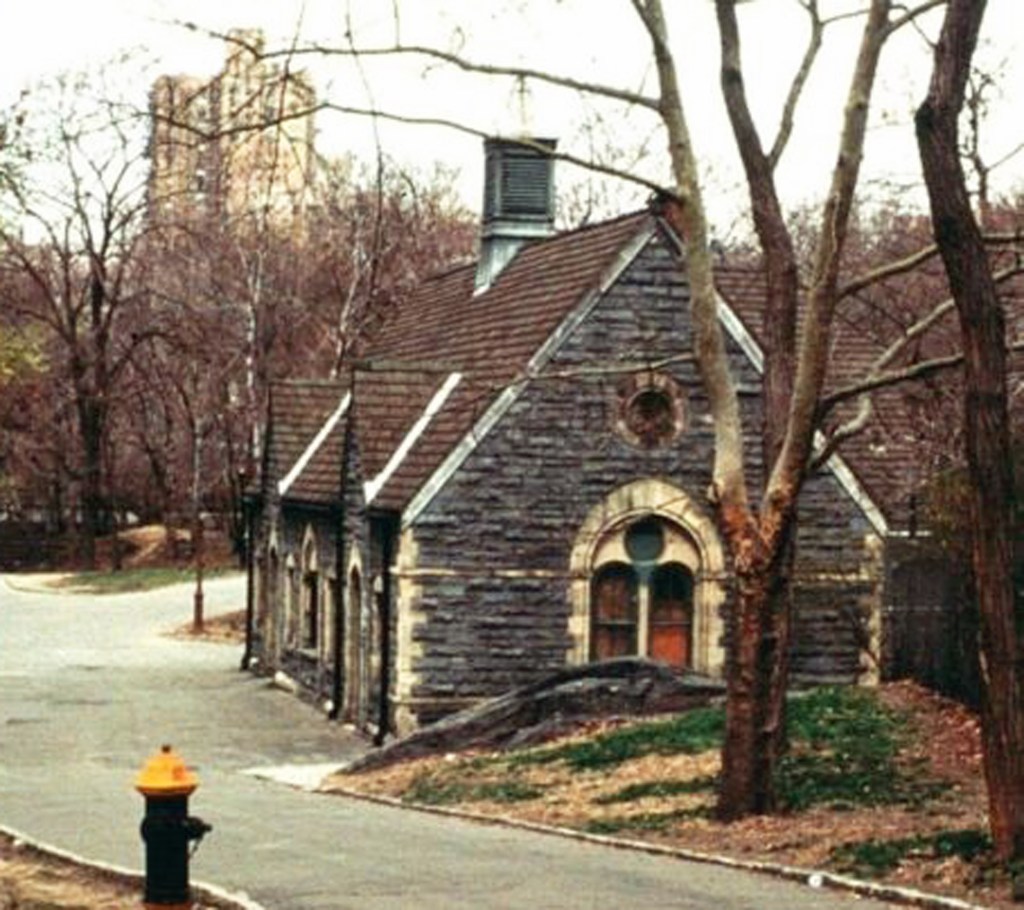
The Dairy opened in 1870 though it was not fully completed until 1871. As mentioned earlier, the building was soon turned into a restaurant which lasted for over 60 years. Sometime in the 1930’s or 40’s the building was used for storage. Over time, the building suffered from a lack of maintenance and in 1954, a maintenance truck had run into the loggia, leading to its removal the following year. Over time, the main room had a second floor installed and the extended eaves with their decorative verge board were eventually removed.
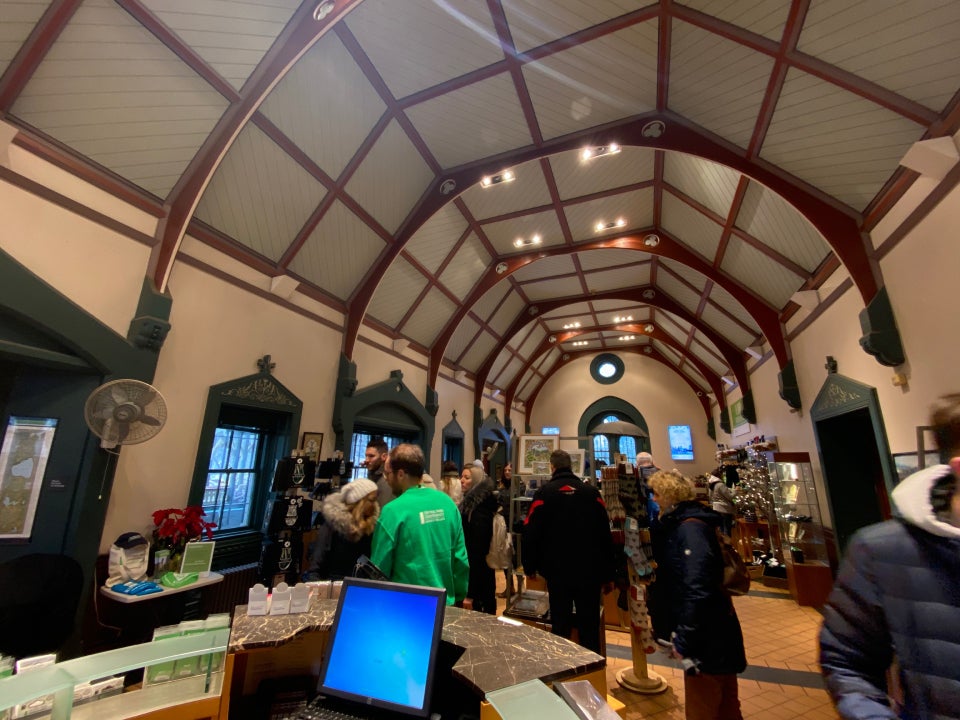
In 1980, the Central Park Conservancy was founded with the task of improving and restoring the park after decades of decline. The restoration of the Dairy was its first major project. At that time, the loggia was rebuilt (without the weather vane, though) and the building was restored to become the first visitors center and gift shop in Central Park which continues to this day. Between 2019 and 2021, the building was again restored and refurbished with a new HVAC system and enhanced lighting.
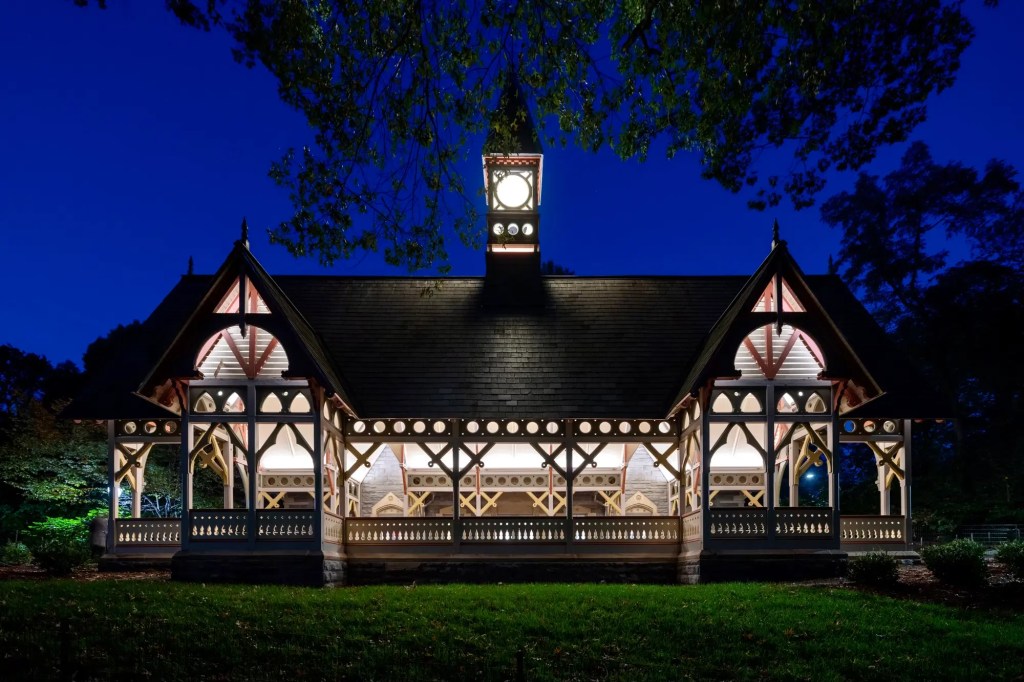
https://www.architectmagazine.com/awards/light-architecture-design-awards/the-dairy-at-central-park_o
Thomas Wisedell’s employment with Central Park was relatively short-lived. In April, 1870, Olmsted and Vaux’ term as the superintendents and architects of Central Park had been terminated. A new board had been voted in and was unwilling to renew their contracts, opting instead to place Jacob Wrey Mould as the new architect-in-chief. Though this was a minor set-back for Calvert Vaux and Frederick Law Olmsted, it would prove to be a great opportunity for the twenty-three-year-old Thomas Wisedell.
Further Reading:
- Second Annual Report of the Board of Commissioners of the Department of Public Works for the year Ending May 1, 1872 (New York: William C. Bryant & Co., 1872).
- Alex, William and Tatum, George B., Calvert Vaux: Architect and Planner (New York: Ink, Inc., 1994).
- Brenwell, Cynthia S., The Central Park: Original Designs for New York’s Greatest Treasure (New York: Abrams, 2019).
- Kowsky, Francis R., Country, Park & City: The Architecture and Life of Calvert Vaux (New York and Oxford: Oxford University Press, 1998).
- Rybczynski, Witold, A Clearing in the Distance. Frederick Law Olmsted and America in the Nineteenth Century (New York: Scribner, 1999).
 The Architecture of Thomas Wisedell